
The Ultimate Reclaimed Wood Guide 2026
Reclaimed wood is one of the most beautiful, durable, and sustainable materials you can build with — and one of the most misunderstood. It’s wood with a past: timber first cut from old-growth forests in the 1800s and early 1900s, put to work in a barn, factory, or warehouse for a century or more, and then carefully salvaged, cleaned, dried, and remilled into flooring,
By Sarah Londerville | Updated September 16, 2026
Reclaimed wood is one of the most beautiful, durable, and sustainable materials you can build with — and one of the most misunderstood. It’s wood with a past: timber first cut from old-growth forests in the 1800s and early 1900s, put to work in a barn, factory, or warehouse for a century or more, and then carefully salvaged, cleaned, dried, and remilled into flooring, paneling, beams, and more. Every board carries a density, a patina, and a story that no newly cut lumber can imitate.
This guide is meant to be the definitive resource on reclaimed wood: what it actually is, how it’s made, the full range of products it becomes, the wood species you’ll encounter and how they differ, what it costs, and how everyone from homeowners to architects sources it. It’s written by Manomin Resawn Timbers, a woman-owned reclaimed wood mill in Hugo, Minnesota, and it links throughout to the specific products and species we make so you can go deeper wherever you like. Let’s dig in.
In This Guide
- What Is Reclaimed Wood?
- Why Choose Reclaimed Wood?
- How Reclaimed Wood Is Made: The Process
- Reclaimed Wood Products
- Reclaimed Wood Species and Character
- How to Choose the Right Reclaimed Wood
- Who Buys Reclaimed Wood — and How
- What Reclaimed Wood Costs
- Caring for Reclaimed Wood
- Frequently Asked Questions
What Is Reclaimed Wood?
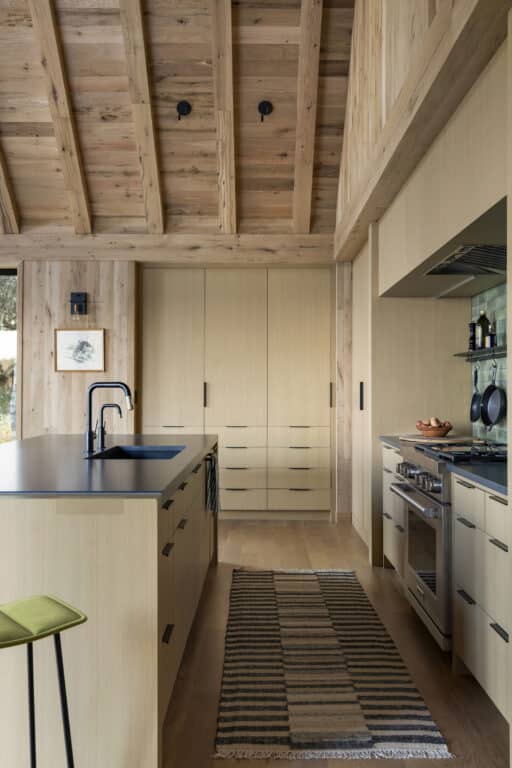
Reclaimed wood is lumber that has been salvaged from an existing structure and reprocessed for a new use, rather than freshly harvested from a forest. Most of it comes from 19th- and early-20th-century barns, industrial buildings, factories, warehouses, and grain elevators across North America — buildings framed and clad in old-growth timber back when that’s all there was. When those structures come down, the wood inside is often far too good to waste, and reclaiming it gives it a second life (Wikipedia has a good general overview of reclaimed lumber).
It’s worth clearing up three terms that get used interchangeably but shouldn’t be:
- Authentic reclaimed wood — genuine antique material salvaged from old structures, then de-nailed, kiln-dried, and remilled. This is the real thing, with true age, patina, and old-growth density.
- Salvaged or urban wood — wood recovered from felled trees (storm damage, disease, development) rather than from buildings. Beautiful, but a different provenance.
- “Reclaimed-look” wood — new lumber distressed or wire-brushed to imitate an aged appearance. It can look convincing from a distance, but it has none of the history, density, or sustainability story of the real thing.
Everything in this guide refers to authentic reclaimed wood, which is all Manomin works with.
Why Choose Reclaimed Wood?
Three things set reclaimed wood apart, and they build on each other.
It’s better material. The timber was cut from slow-growing, old-growth forests, so the growth rings are tight and the wood is denser, harder, and more dimensionally stable than fast-grown new lumber. Properly kiln-dried, reclaimed wood has already done a century of expanding and contracting; it tends to stay put once installed, which matters enormously for flooring and anything over a heat source.
It has character you cannot manufacture. Nail holes, checking, saw kerf, weathering, insect tracks, hand-hewn axe marks, and rich patina are the fingerprints of a real working life. No stain or distressing process replicates authentic age.
It’s genuinely sustainable. Reclaiming wood keeps usable timber out of the landfill and means no new tree has to be cut, which is why it’s one of the greenest building materials available — a point worth reading more about in our piece on why reclaimed is the most sustainable wood option. Material from a supplier with Forest Stewardship Council (FSC)certification also comes with the documentation architects and builders need for green-building credits, and it aligns with the reuse principles the EPA promotes for construction materials. For a deeper look at the case for the material, see why reclaimed wood.
How Reclaimed Wood Is Made: The Process
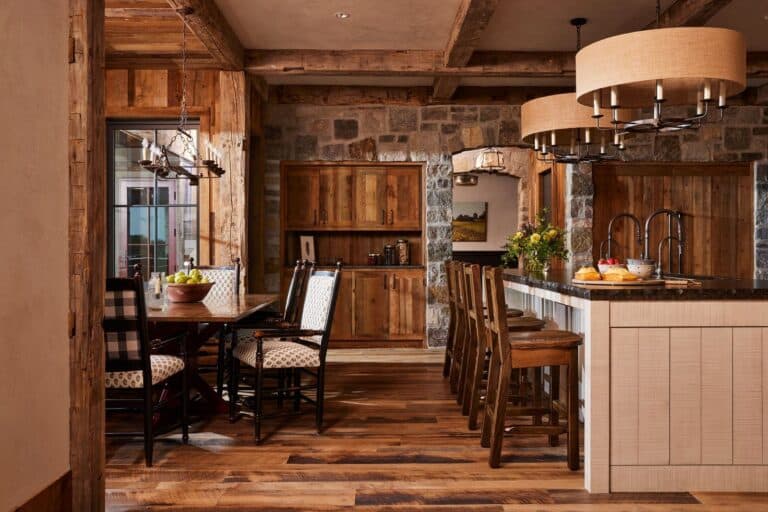
One of the biggest misconceptions about reclaimed wood is that it’s simply pulled off an old barn and nailed back up. In reality, turning weathered salvage into finished, installation-ready flooring or paneling is a careful, multi-step process — and it’s where a real mill earns its keep. Here’s how Manomin does it (you can see more on our process page):
- Sourcing and deconstruction. It starts with finding the right structures — barns and industrial buildings, largely across the Upper Midwest — and carefully dismantling them by hand so the timber comes down intact rather than crushed.
- Metal detection and de-nailing. Every board and beam is scanned with metal detectors and painstakingly de-nailed. A single hidden nail or bolt can ruin a planer blade or an installer’s saw, so this step is non-negotiable.
- Sorting and grading. Material is sorted by species, dimension, color, and character, then graded — separating, say, clean face boards from heavily weathered barn siding — so each order is consistent.
- Kiln-drying. The wood is kiln-dried to the correct interior moisture content (typically 6–9%). This stabilizes it, and critically, the heat also eliminates any insects or larvae, so the finished material is clean and inert.
- Remilling and profiling. Boards are remilled to precise, modern dimensions and profiles — tongue-and-groove flooring, shiplap paneling, square-edge box beams, custom widths — while preserving the original weathered or textured face where the design calls for it.
- Finishing and quality control. Finally, material is finished to spec (or left raw for on-site finishing) and inspected before it ships.
That process is the difference between a pile of old boards and a floor that installs cleanly and lasts generations.
Reclaimed Wood Products
Reclaimed wood can become almost any wood element in a home. Here’s the full range Manomin mills, with where each one shines. Explore them all on the reclaimed wood products hub.
| Product | What it is | Popular for | Learn more |
|---|---|---|---|
| Flooring | Wide-plank antique flooring in oak, elm, fir, pine & more | Whole-home floors with old-growth durability & character | Reclaimed flooring |
| Wall & ceiling paneling | Shiplap, tongue-and-groove & mixed-width cladding | Accent walls, feature ceilings, wainscoting | Reclaimed paneling |
| Box beams | Hollow, lightweight 3-sided beams with reclaimed faces | Decorative & coffered ceilings, wrapping structure | Box beams |
| Timbers | Solid reclaimed & hand-hewn beams | Structural & statement timber, trusses, posts | Reclaimed timbers |
| Fireplace mantels | Hand-hewn or clean reclaimed beams, cut to fit | The focal point over a hearth | Reclaimed mantels |
| Custom pieces | Table tops, bar tops, stair treads, furniture & one-offs | Statement furniture and bespoke details | Custom reclaimed wood |
Reclaimed wood flooring is the most popular use, and for good reason: old-growth reclaimed flooring is harder and more stable than most new wood, and it brings instant warmth and history underfoot. It comes in a wide range of species and widths, from refined antique oak to rugged weathered barnwood.
Wall and ceiling paneling (also called cladding) turns a flat surface into a focal point. Reclaimed shiplap and tongue-and-groove are lightweight and install cleanly, and they pair beautifully with beams — see our guide to reclaimed paneling and box beams together for that combination.
Box beams give you the full look of a massive timber ceiling without the weight or structural work, because they’re hollow and slip over a simple cleat. Our complete box beams guide covers the design ideas, sizing, and install.
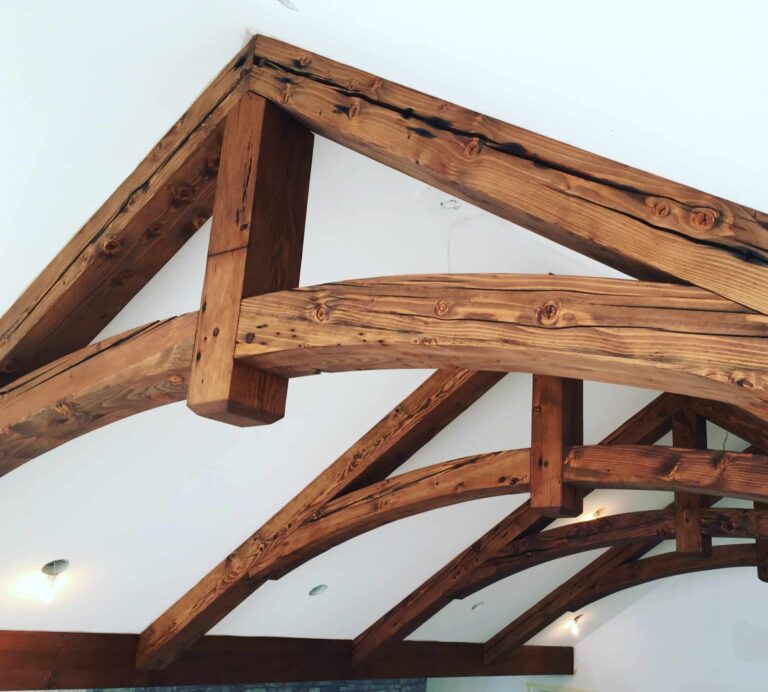
Solid timbers and hand-hewn beams are the real, heavy thing — used both structurally and as dramatic architectural statements, from ridge beams to posts to trusses.
Fireplace mantels are one of the highest-impact single pieces of reclaimed wood you can add; our reclaimed wood mantel guide walks through wood, sizing, and safe installation.
Custom pieces — table and bar tops, stair treads, range hoods, floating shelves, and bespoke furniture — let you carry the material into the details of a space.
Reclaimed Wood Species and Character
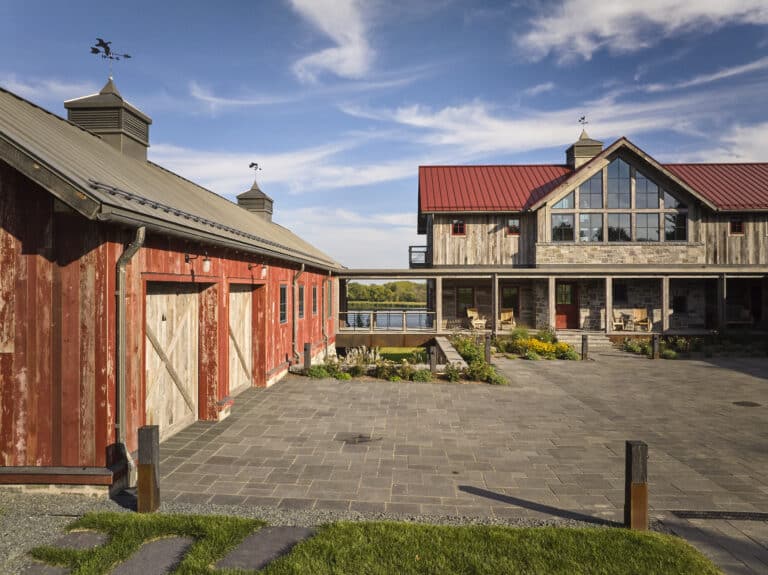
The species of a reclaimed board shapes its color, grain, hardness, and best use. Reclaimed wood also comes in character lines — grouped by finish and weathering rather than species — which we’ll cover after the species themselves. You can browse every option on the reclaimed wood types page; the hardness figures below are approximate values from the Janka hardness scale.
| Species | Look & color | Hardness (Janka, approx.) | Character | Great for |
|---|---|---|---|---|
| Antique White Oak | Light-to-medium brown, tan; ray fleck | ~1,350 | Dense, timeless, very durable | Flooring, paneling, box beams |
| Antique Skip Oak | Oak with original skip-sawn texture | ~1,300 | Rustic surface texture, signature look | Flooring, paneling |
| Antique Ash | Creamy, light with bold straight grain | ~1,320 | Strong, shock-resistant, bright | Flooring, paneling |
| Antique Elm | Warm reddish-brown, interlocking grain | ~830 | Tough, resists splitting; rich grain | Flooring, paneling, box beams |
| Antique Black Walnut | Deep chocolate-brown heartwood | ~1,010 | Premium, luxurious, rare in reclaimed | Flooring, statement pieces |
| Antique Wormy Chestnut | Light brown with worm tracks & holes | ~540 | Historic, one-of-a-kind; reclaimed-only | Flooring, paneling |
| Reclaimed Douglas Fir | Warm amber/orange, straight grain | ~660 | Old-growth density & stability; many grades | Flooring, timbers, mantels, paneling |
| Reclaimed Heart Pine | Rich amber/honey, tight old-growth grain | ~1,225 | Historic, hard for a pine, warm tone | Flooring, paneling |
| Mixed Hardwood | Varied tones & grains blended | varies | Character-rich, great value | Flooring, paneling |
A few of these deserve a closer look because the story is part of the appeal:
Oak is the workhorse of reclaimed flooring — dense, water-resistant, and endlessly versatile. Manomin’s antique white oak and Antique Skip Oak (oak left with its original skip-planed surface) are among our most popular.
Elm carries a quiet history: American elms were devastated by Dutch elm disease across the 20th century, so much of the elm in use today is reclaimed. Its interlocking grain makes it tough and beautiful — explore antique elm flooring.
Wormy chestnut is the rarest story of all. The American chestnut was nearly wiped out by a blight in the early 1900s (a history the American Chestnut Foundation is working to reverse), which means every piece of chestnut lumber today is genuinely antique and reclaimed. The characteristic worm tracks come from insects in the long-dead standing timber. See antique wormy chestnut.
Douglas fir is prized in reclaimed form because old-growth fir — often pulled from massive factory beams — is dramatically denser and more stable than new fir, with a warm amber tone and bold straight grain. It comes in several grades, from vertical-grain to rough-sawn to our Signature line.
Heart pine (reclaimed Southern Yellow heart pine) comes from old-growth longleaf forests that are largely gone, so, like chestnut, reclaimed is the only real source. It’s far harder than modern pine and glows a warm honey-amber — see reclaimed heart pine.
Black walnut and ash round out the hardwoods — walnut for its luxurious dark tone and ash for its bright, bold, shock-resistant grain.
Beyond individual species, reclaimed wood also comes in character and finish lines defined by how the wood weathered or was treated:
- Weathered Gray & Weathered Antique barnwood — silvery-gray to warm-brown barn siding with authentic weathering, ideal for rustic walls and ceilings (weathered gray barnwood).
- Antique Red Barnwood — barn boards that kept their faded red-paint patina.
- Platinum Gray — a cooler, refined gray tone.
- Hand-Hewn Timbers — beams squared by hand generations ago, with deep axe and adze marks (hand-hewn timbers).
- Shou Sugi Ban — reclaimed wood finished with the Japanese charring technique (yakisugi) for a dramatic blackened surface (shou sugi ban paneling).
How to Choose the Right Reclaimed Wood
With that many species and products, choosing comes down to three questions:
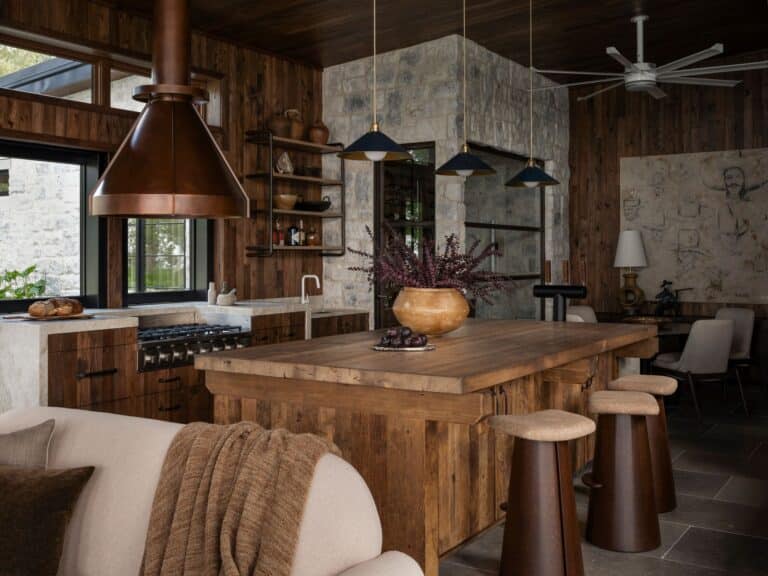
What look do you want? Refined and warm points you toward oak, walnut, heart pine, or vertical-grain fir. Rugged and rustic points toward weathered barnwood, hand-hewn timbers, or skip-textured oak. Dramatic and modern might mean shou sugi ban or a clean-milled beam with square edges.
Where is it going? High-traffic floors want a harder species (oak, ash, heart pine); walls and ceilings can use anything, including softer or more delicate character woods; a mantel or beam is about visual impact more than wear.
How much does it need to match? For a large floor or a whole-home package, consistency matters — which is why milling species and grade to order (rather than buying odd-lot salvage) is worth it. A good supplier will send samples and help you coordinate species, tone, and finish across rooms.
Who Buys Reclaimed Wood — and How
Reclaimed wood serves very different buyers, and the way you work with a supplier depends on which one you are.
| You are a… | What you typically need | How Manomin helps |
|---|---|---|
| Homeowner | Guidance, samples, a showroom to see material, single pieces to whole rooms | Direct support, showroom visits, and help choosing species & finish |
| Custom builder | Volume, reliable lead times, jobsite delivery, consistency across a build | Full product line milled in-house, coordinated whole-home packages |
| Interior designer | Samples for client presentations, specific tones/textures, custom finishes | Broad species range, custom milling, and design coordination |
| Architect | Spec sheets, custom profiles, FSC/LEED documentation | FSC-certified material, milling to exact spec, and green-building docs |
Homeowners can work with Manomin directly — visit the showroom, take home samples, and get straightforward guidance on everything from a single mantel to a whole-home flooring package. You don’t need to be a pro to buy well; our beginner’s guide to buying reclaimed wood is a great starting point, along with tips on finding reclaimed wood near you.
Custom builders, designers, and architects work reclaimed wood into their projects as a signature material. Because Manomin mills flooring, paneling, beams, timbers, and mantels in-house, the trade can source a whole home from one place, match species and grade across every room, get custom profiles cut to spec, and receive the FSC documentation that supports LEED and other green-building goals. We work with these teams constantly — see our supplier guides for builders and our roundup of the best reclaimed wood suppliers in Minnesota.
What Reclaimed Wood Costs
Reclaimed wood is a premium material, and pricing varies widely by species, grade, board width, source, finish, and supplier. The ranges below are general U.S. market estimates to help you budget — not any single supplier’s rates — and custom work is always quoted per project.
| Product | Typical U.S. range (material) | What moves the price |
|---|---|---|
| Reclaimed flooring | ~$9–$25+ / sq ft | Species, plank width, grade, finish |
| Wall & ceiling paneling | ~$7–$18 / sq ft | Species, pattern, coverage |
| Box beams | ~$25–$60+ / linear ft | Size, species, layout complexity |
| Solid / hand-hewn timbers | ~$20–$70+ / linear ft | Dimension, species, hewn vs. sawn |
| Fireplace mantels | ~$400–$1,800+ each | Size, species, custom detailing |
Because character, rarity (think wormy chestnut or reclaimed walnut), and labor all factor in, the best way to budget is to get a written, itemized quote for your exact material and quantities.
Caring for Reclaimed Wood
One of the quiet advantages of reclaimed wood is that it asks for very little. Because it was kiln-dried and stabilized before installation, a properly finished reclaimed floor or wall behaves like any quality wood surface — regular dusting, prompt cleanup of spills, and the occasional refresh. Most homeowners either leave the original weathered face untouched or seal it with a clear matte or satin finish to lock in the patina. For specifics, see our guides on how to finish reclaimed wood and how to clean and care for reclaimed wood.
Frequently Asked Questions
What is reclaimed wood? Reclaimed wood is lumber salvaged from an existing structure — usually 19th- and early-20th-century barns, factories, and warehouses — then de-nailed, kiln-dried, and remilled for a new use. It’s genuine antique, old-growth material, which is different from new wood distressed to look reclaimed.
Is reclaimed wood more durable than new wood? Generally, yes. Reclaimed wood was cut from slow-growing old-growth timber, so it’s denser and harder than most new lumber, and because it has already acclimated over a century, properly kiln-dried reclaimed wood is very dimensionally stable.
What products can be made from reclaimed wood? Flooring, wall and ceiling paneling, box beams, solid and hand-hewn timbers, fireplace mantels, stair treads, table and bar tops, range hoods, and custom furniture — essentially any wood element in a home.
What are the most popular reclaimed wood species? Antique oak (white and skip), Douglas fir, elm, ash, heart pine, black walnut, and wormy chestnut are among the most common, along with weathered barnwood character lines. Each has a distinct color, grain, and hardness.
Is reclaimed wood sustainable? Very. It reuses existing timber, so no new tree is cut and usable wood is kept out of the landfill. Material from an FSC-certified supplier also comes with documentation that can support LEED and other green-building certifications.
Does reclaimed wood have bugs or nails in it? Not when it’s properly processed. A quality mill scans and de-nails every board and kiln-dries the wood, which removes metal and eliminates any insects or larvae. That’s why buying from an experienced supplier matters.
Is reclaimed wood good for flooring? Yes — it’s one of the best uses. Old-growth reclaimed flooring is typically harder and more stable than new wood, and it brings warmth and character no new floor can match. Choose a harder species like oak, ash, or heart pine for high-traffic areas.
How much does reclaimed wood cost? It’s a premium material. As general U.S. market ranges, flooring runs roughly $9–$25+ per square foot and paneling about $7–$18 per square foot, with beams and mantels quoted by size and species. Rarity and custom work raise the price; always get a written quote.
Can I use reclaimed wood in a modern home? Absolutely. Milled to clean, square edges and given a smooth finish, reclaimed wood reads as strikingly contemporary while still carrying the warmth of aged material. It’s not just for farmhouse and rustic interiors.
Where does reclaimed wood come from? Most authentic reclaimed wood is salvaged from old barns, factories, warehouses, and grain elevators — often across the Upper Midwest for Manomin — that are carefully deconstructed so the timber comes down intact.
Can homeowners buy reclaimed wood directly, or only through a builder? Both. Homeowners can work with Manomin directly — visit the showroom, get samples, and buy anything from a single mantel to a whole-home package — while builders, designers, and architects source it as a spec material for their projects.
Bring Your Project to Life with Manomin Resawn Timbers
Reclaimed wood is only as good as the mill behind it, and that’s where Manomin Resawn Timbers comes in. We’re a woman-owned, family-run reclaimed wood company in Hugo, Minnesota, and we’ve spent years earning a reputation as the state’s reclaimed wood experts — FSC-certified, 13-time Best of Houzz honorees, and a trusted partner to the region’s top custom builders, architects, and designers. We salvage, de-nail, kiln-dry, and remill every product in-house, from flooring and paneling to timbers, box beams, and mantels, in the full range of species and character lines covered above. We ship nationwide, and if you’re local you’re always welcome to visit the showroom and feel the material for yourself.
Ready to start? Explore the full reclaimed wood products and wood types collections, or get in touch for a quote.
Manomin Resawn Timbers — Minnesota’s reclaimed wood experts. Reclaimed flooring, paneling, cladding, timbers, box beams, and hand-hewn mantels for homeowners, builders, architects, and designers nationwide. FSC Certified · 13× Best of Houzz. mrtimbers.com
The Ultimate Reclaimed Wood Guide 2026
Reclaimed wood is one of the most beautiful, durable, and sustainable materials you can build with — and one of the most misunderstood. It’s wood with a past: timber first cut from old-growth forests in the 1800s and early 1900s, put to work in a barn, factory, or warehouse for […]
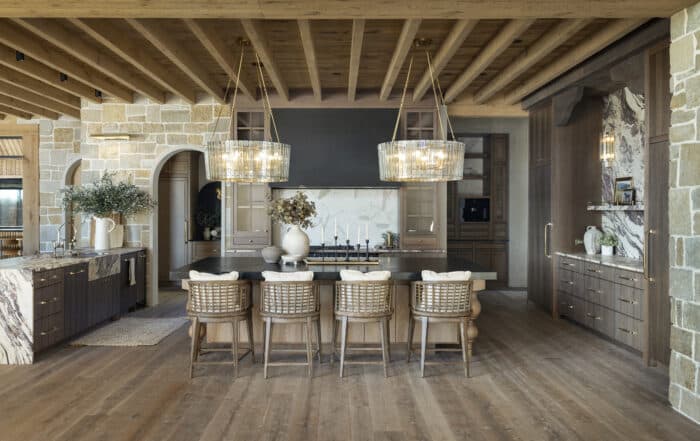
Reclaimed Wood Paneling and Box Beams: The Perfect Ceiling Combo
Individually, they’re beautiful. Together, they’re unforgettable. Reclaimed wood paneling and box beamscombine into what might be the single most impactful ceiling you can build — a fully clad, timber-crossed expanse of authentic old-growth wood that turns an ordinary room into the kind of space people stop and look up in. […]