
Rough Sawn Lumber: What It Is, Sizes, Uses, and Where to Buy It
Rough sawn lumber is wood exactly as it comes off the sawmill blade — cut to size but not planed smooth, so it keeps the texture, the full dimension, and the character that surfaced lumber loses. Woodworkers love it because it’s often cheaper and gives you more wood to work with; builders and designers love it because that saw-textured face brings a warmth and ruggedness you

By Sarah Londerville | Updated October 13, 2026
Rough sawn lumber is wood exactly as it comes off the sawmill blade — cut to size but not planed smooth, so it keeps the texture, the full dimension, and the character that surfaced lumber loses. Woodworkers love it because it’s often cheaper and gives you more wood to work with; builders and designers love it because that saw-textured face brings a warmth and ruggedness you can’t fake. But it also comes with trade-offs, a confusing set of size rules, and some decisions to make before you buy.
This guide covers everything you need to know about rough sawn lumber: what it actually is, how it differs from surfaced (S4S) lumber, how its sizes and dimensions work, the pros and cons, what it costs, how to finish it, and where to buy it — including when it’s worth stepping up to premium reclaimed rough-sawn wood from a dedicated mill like Manomin Resawn Timbers. Let’s get into it.
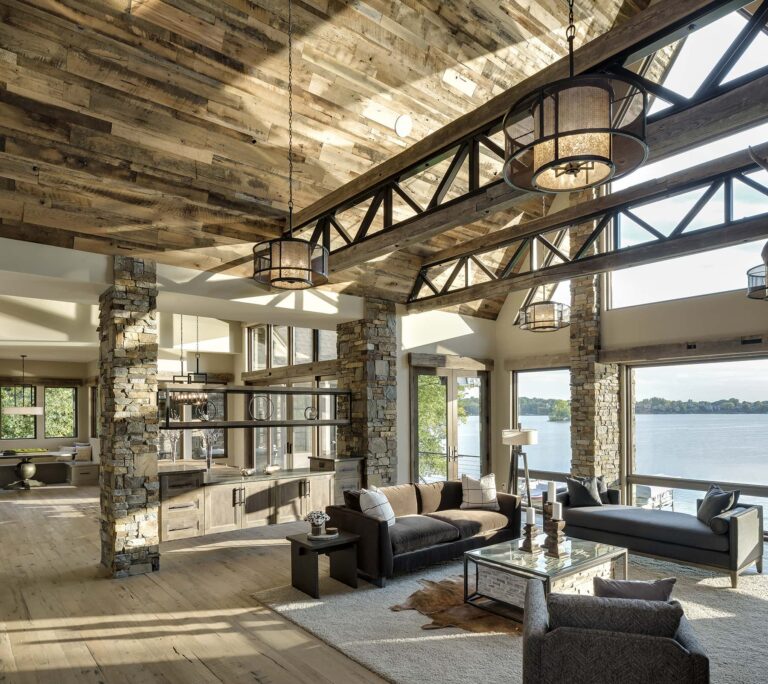
What Is Rough Sawn Lumber?
Rough sawn lumber (also called rough cut lumber) is a board that has been sawn from a log to approximate dimensions but not surfaced — meaning it hasn’t been run through a planer or jointer to make it smooth and perfectly flat. The faces still show the marks of the saw (circular or band-saw patterns), the edges may be slightly uneven, and the board sits at or near its full stated thickness.
In short: surfaced lumber is finished and ready to use; rough sawn lumber is raw and gives you control over the final result. That raw state is exactly what some people want — for a rustic, textured look, or to plane the wood down themselves — and exactly what others want to avoid, if they need boards that are ready to build with out of the rack.
Rough Sawn vs. Surfaced (S4S) Lumber
This is the single most important distinction to understand before you buy. Lumber is sold in a few surfacing states, abbreviated by how many sides have been planed smooth:
| Term | What it means | Surface |
|---|---|---|
| Rough sawn (RGH) | Straight off the saw, not planed | Textured on all sides |
| S2S | Surfaced two sides (the two faces planed) | Smooth faces, rough edges |
| S3S | Surfaced three sides | Two smooth faces + one smooth edge |
| S4S | Surfaced four sides | Smooth, square, ready to use |
S4S lumber is what most people picture from a home-improvement store: smooth, straight, uniform, and ready to build with. It costs more and comes in smaller finished dimensions (because material was planed away). Rough sawn lumber is the opposite end — more texture, more wood, usually a lower price per board foot, but you may need to flatten and smooth it yourself for fine work. “Rough sawn vs. smooth” really comes down to how much finishing you want to do and what look you’re after.

Rough Sawn Lumber Sizes and Dimensions
Sizing is where rough sawn lumber trips people up, because a rough sawn board is close to its full stated size, while a surfaced board is smaller than its name suggests.
- Softwood (construction) lumber is sold by nominal size. A surfaced “2x4” actually measures 1.5” × 3.5”. A rough sawn 2x4 is close to a full 2” × 4” — noticeably bigger and heavier.
- Hardwood lumber is sold rough by thickness in quarters of an inch, and by the board foot. “4/4” (four-quarter) means roughly 1” thick rough, “5/4” is 1.25”, “6/4” is 1.5”, and “8/4” is 2”. After surfacing, a 4/4 board finishes around 13/16” to 7/8”. A board foot equals 144 cubic inches — a piece 1” thick × 12” wide × 12” long (see the board foot definition for the math).
The practical takeaway: buying rough sawn gives you more thickness to work with, which matters if you plan to plane the board or want a finished piece at full dimension. Just remember to buy a little extra thickness to allow for what you’ll remove when flattening.
Pros and Cons of Rough Sawn Lumber
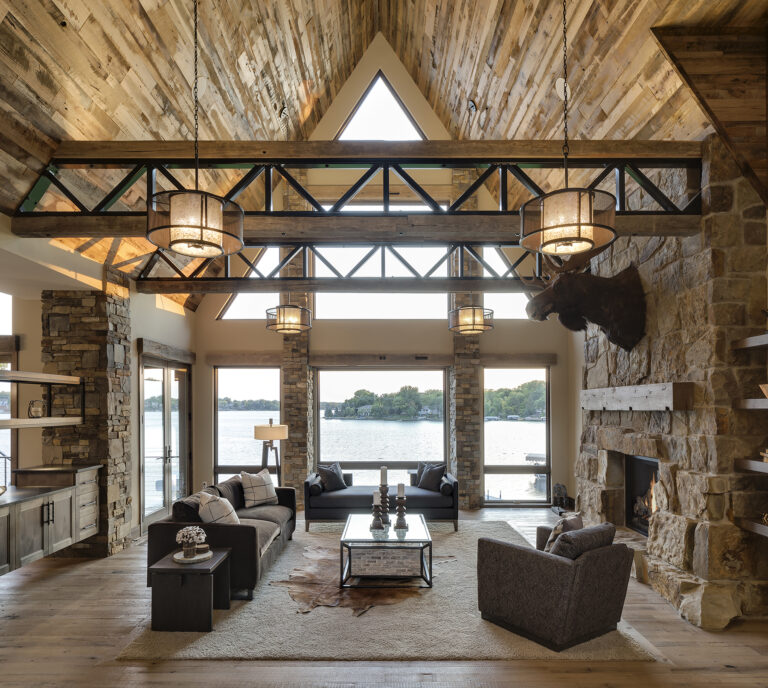
Advantages: - More wood for your money — rough hardwood is usually cheaper per board foot than surfaced, and you get full thickness. - You control the final result — plane it to the exact thickness and smoothness your project needs. - Texture and character — the saw-marked face is prized for rustic, farmhouse, and architectural looks. - Great outdoors — the rougher surface holds stain and paint well, which is why rough sawn is popular for fences, siding, timbers, and outdoor projects. - Availability of character and old-growth stock — much of the most beautiful rough sawn material (especially reclaimed) simply isn’t available surfaced.
Disadvantages: - It usually needs milling — for cabinets, furniture, or anything that must be flat and smooth, you’ll need a planer and jointer (or a mill that does it for you). - Harder to judge — defects and grain are tougher to see under the rough surface until it’s planed. - Splinters and handling — the raw surface is rougher on hands and tools. - Not dimensionally precise — edges and thickness vary, so it’s not drop-in ready.
Is Rough Sawn Lumber Cheaper?
Often, yes — especially for hardwoods. Because the mill skips the surfacing step and sells you the full thickness, rough sawn hardwood typically costs less per board foot than the same wood surfaced. You’re essentially trading a lower price for the labor of milling it yourself.
That said, “rough sawn” doesn’t always mean cheap. Premium and rare species, wide boards, and reclaimed or old-growth rough-sawn wood command higher prices because the material itself is more valuable and harder to find — you’re paying for character, density, and provenance, not surfacing. So whether rough sawn is cheaper depends entirely on what wood you’re buying and why.
Common Rough Sawn Species
Rough sawn lumber is available in nearly every species, and the choice drives both look and use:
- Pine — the most common and affordable; great for rustic projects, shelving, and outdoor use.
- Cedar and cypress — naturally rot-resistant, ideal for siding, fencing, and exterior work.
- Oak and white oak — dense, durable hardwoods for furniture, flooring, and timber.
- Walnut, cherry, ash, and maple — prized furniture hardwoods usually sold rough by the board foot.
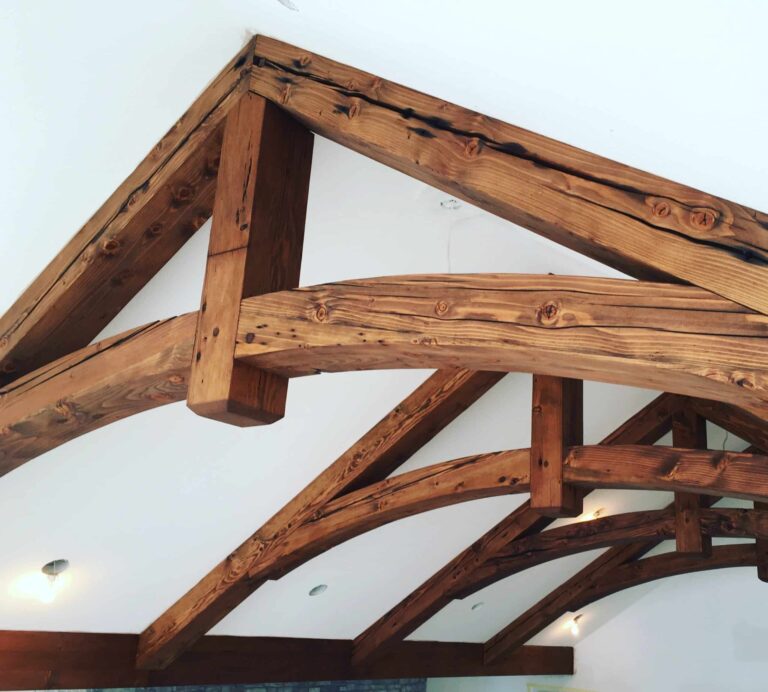
- Douglas fir — strong and stable, a favorite for beams, timbers, and character flooring — especially in reclaimed, old-growth form.
How to Work With and Finish Rough Sawn Lumber
How much you do to rough sawn lumber depends on the look you want:
- Leave it rough for rustic siding, accent walls, ceilings, beams, and outdoor projects where the texture is the point.
- Plane and joint it for furniture, cabinets, and anything that needs to be flat, smooth, and square. Always buy extra thickness to allow for material removed in milling.
- Make sure it’s kiln-dried. Rough sawn lumber should be dried to the right moisture content (typically 6–9% for interior use) before you build with it, or it will move, cup, and crack as it dries. Reputable suppliers kiln-dry their stock.
- Finishing and staining: the rough, open surface drinks up stain and sealers, so it takes finish readily — one reason it’s great outdoors. For interior pieces, a clear matte or satin sealer locks in the texture and color; our guide on how to finish reclaimed wood walks through the options.
What Rough Sawn Lumber Is Used For
Because of its texture and full dimension, rough sawn lumber shines in applications where character and strength matter more than a glass-smooth finish:
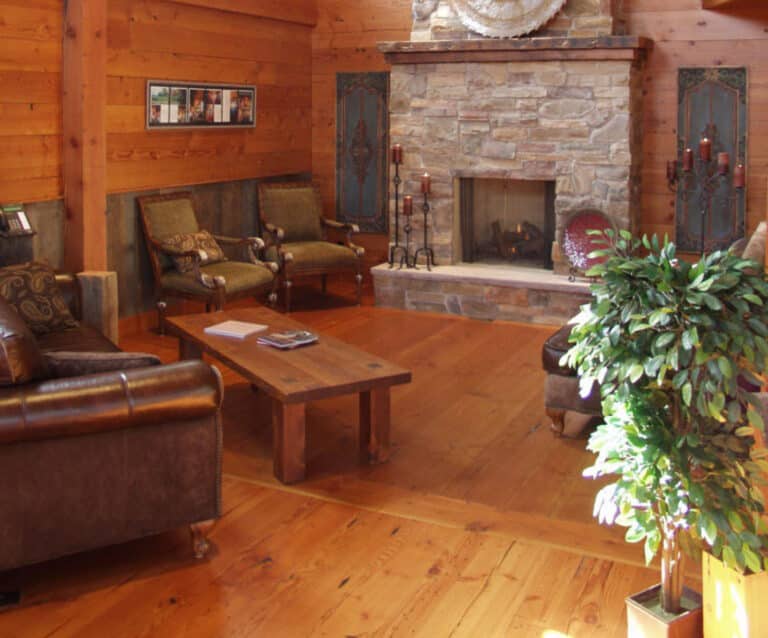
- Rustic and farmhouse interiors — accent walls, wall and ceiling paneling, and feature ceilings.
- Beams and timbers — structural and decorative timber work, mantels, and trusses.
- Character flooring — rough-sawn-textured flooring brings warmth and grip underfoot.
- Outdoor projects — siding, fencing, pergolas, and furniture, where the rough surface holds finish and weathers beautifully.
- Furniture and millwork — once planed, rough stock becomes tables, shelving, and cabinetry at full thickness.
Where to Buy Rough Sawn Lumber
For everyday rough sawn pine, cedar, or construction lumber, your best sources are local sawmills and lumber yards — searching “rough sawn lumber near me” will turn up the mills in your area, and many sell by the board foot. Big-box stores carry some rough sawn boards too.
But if you want the premium end of rough sawn — authentic, old-growth, character-rich material — that’s a different product entirely, and it’s where Manomin Resawn Timbers comes in. We’re a reclaimed wood mill, and much of our material carries a genuine rough-sawn texture pulled from century-old timber: our reclaimed Douglas fir rough-sawn flooring, rough-sawn timbers and beams, and rough-textured paneling. It’s denser, more stable, and more beautiful than new rough sawn lumber, and it’s already de-nailed and kiln-dried, ready to install. To learn more about the material, see our complete guide to reclaimed wood.
So the rule of thumb: for commodity rough sawn, use a local sawmill; for premium reclaimed rough-sawn flooring, cladding, and timbers with real old-growth character, talk to Manomin.
Frequently Asked Questions
What does “rough sawn lumber” mean? It means lumber that has been sawn to size but not planed smooth. The faces still show saw marks, the board sits near its full stated dimension, and it’s meant to be used as-is for a rustic look or milled smooth for fine work.
Is rough sawn lumber cheaper? Usually, for hardwoods — because the mill skips surfacing and sells you full thickness, rough sawn typically costs less per board foot than surfaced lumber. The exception is premium, rare, or reclaimed rough-sawn stock, which costs more for its character and quality, not its surfacing.
What are the disadvantages of rough sawn lumber? It usually needs planing and jointing to be flat and smooth, defects are harder to spot under the rough surface, it can splinter, and its dimensions aren’t precise — so it’s not drop-in ready for projects that need finished, square boards.
Can you still buy rough cut lumber? Yes. Local sawmills and lumber yards are the main source, and many sell rough sawn boards by the board foot. Reclaimed wood mills like Manomin also offer premium rough-sawn material in flooring, timbers, and paneling.
What’s the difference between rough sawn and S4S lumber? S4S (“surfaced four sides”) is planed smooth and square on all four sides, ready to build with, and comes in smaller finished dimensions. Rough sawn is unplaned, near full dimension, more textured, and usually cheaper per board foot — but you finish it yourself.
Do you have to plane rough sawn lumber? Only if you need it flat and smooth, as for furniture or cabinets. For rustic siding, accent walls, beams, and outdoor projects, rough sawn is used as-is because the texture is the whole appeal.
What are rough sawn lumber sizes? Softwood rough sawn sits near its full nominal size (a rough 2x4 is close to a true 2” × 4”), while hardwood is sold rough by the quarter-inch (4/4 ≈ 1”, 8/4 ≈ 2”) and by the board foot.
Does rough sawn lumber need to be kiln-dried? Yes, for interior building — it should be dried to about 6–9% moisture content so it stays stable and doesn’t cup or crack. Quality suppliers kiln-dry their rough sawn stock.
Manomin Resawn Timbers is a woman-owned reclaimed wood mill in Hugo, MN, producing reclaimed rough-sawn flooring, paneling, timbers, box beams, and mantels for homeowners, builders, architects, and designers nationwide. FSC Certified · 13× Best of Houzz. Explore our reclaimed wood products or get a quote.
Rough Sawn Lumber: What It Is, Sizes, Uses, and Where to Buy It
Rough sawn lumber is wood exactly as it comes off the sawmill blade — cut to size but not planed smooth, so it keeps the texture, the full dimension, and the character that surfaced lumber loses. Woodworkers love it because it’s often cheaper and gives you more wood to work with; […]
The Ultimate Reclaimed Wood Guide 2026
Reclaimed wood is one of the most beautiful, durable, and sustainable materials you can build with — and one of the most misunderstood. It’s wood with a past: timber first cut from old-growth forests in the 1800s and early 1900s, put to work in a barn, factory, or warehouse for […]