
Reclaimed Wood Mantels: The Complete Guide to Choosing, Styling & Installing One
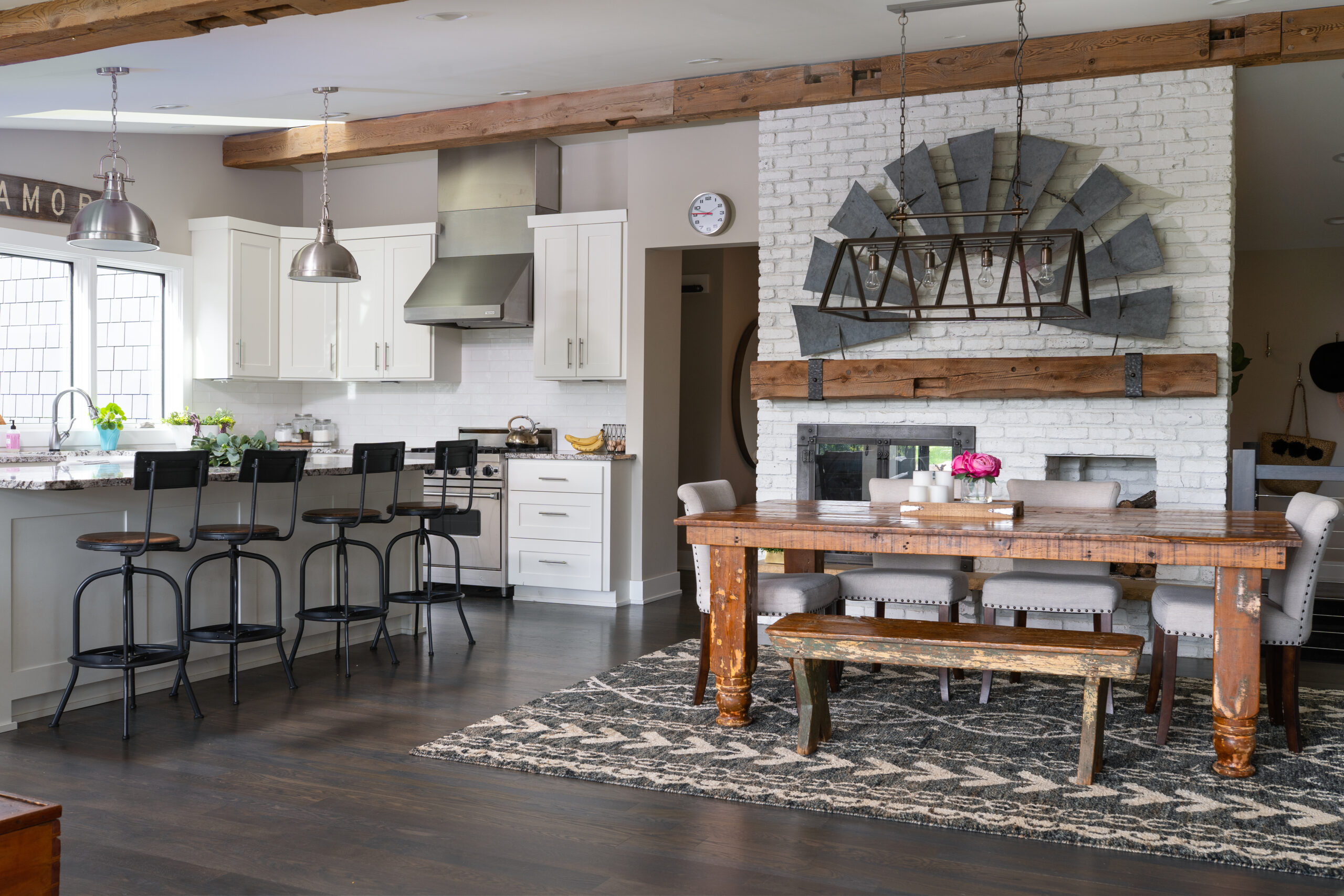
Few details transform a room like a reclaimed wood mantel. A single weathered beam above the fireplace becomes the anchor of the whole space — part architecture, part sculpture, part story. Where a new, machine-milled board reads as filler, a reclaimed timber carries a century of character you simply can’t manufacture: saw marks, nail holes, checking, and a patina earned over decades. If you’re
By Sarah Londerville | Updated October 13, 2026
Few details transform a room like a reclaimed wood mantel. A single weathered beam above the fireplace becomes the anchor of the whole space — part architecture, part sculpture, part story. Where a new, machine-milled board reads as filler, a reclaimed timber carries a century of character you simply can’t manufacture: saw marks, nail holes, checking, and a patina earned over decades. If you’re weighing one for your own home, this guide covers everything that matterFs — the wood species, the styles, how to size it, how it works over different fireplaces, what drives the cost, and how to get one that’s genuinely one of a kind.
At Manomin Resawn Timbers, we’ve been hand-selecting antique timbers and turning them into custom reclaimed wood mantels for designers, builders, and homeowners for decades. Consider this the definitive reference we wish everyone had before they started. (A quick note on spelling: you’ll see both “mantel” and “mantle” online — mantel is the architectural term for the shelf and surround above a fireplace, while mantle technically means a cloak. People search both, but if you want to be correct, it’s mantel.)
What Is a Reclaimed Wood Mantel?
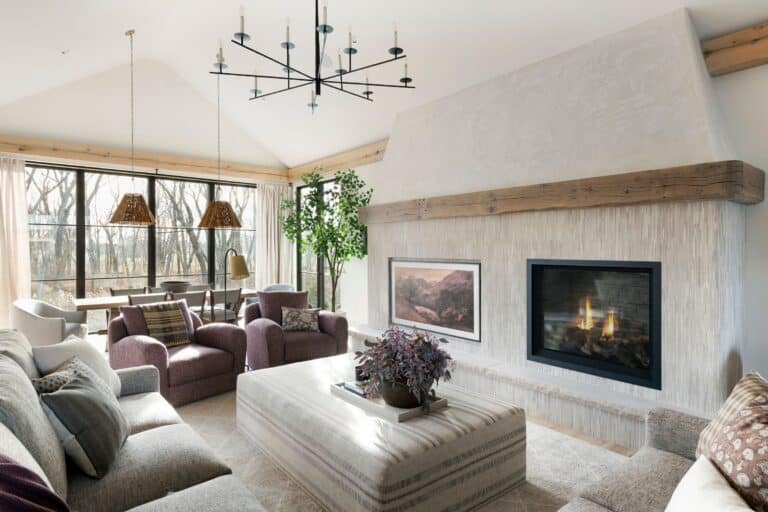
A reclaimed wood mantel is a fireplace mantel milled from salvaged timber — wood rescued from old barns, factories, warehouses, and other structures rather than cut from a living tree. That origin is the whole point. The wood has already spent 50, 100, or even 150 years in service, which means it has been naturally seasoned, has developed a rich patina, and often comes from old-growth timber that is denser and more stable than anything harvested today.
Most reclaimed mantels take one of two forms: a solid timber mantel, cut from a single heavy beam, or a hollow box-beam mantel, built as a three-sided U that wraps a cleat on the wall (lighter, easier to install, and ideal over heat). Both deliver the same rugged, authentic look — the right choice depends on your fireplace, your wall, and the weight you want to hang.
Why Choose Reclaimed Wood Over New Lumber
| What you get | Why it matters for a mantel |
|---|---|
| Authentic character | Saw marks, hand-hewn facets, nail holes, and natural checking that new wood can only imitate with fake distressing. |
| Old-growth strength | Reclaimed beams often come from slow-grown, tight-grained old-growth timber — denser and more dimensionally stable than fast-grown new lumber. |
| A patina you can't buy new | Decades of oxidation and wear give reclaimed wood a depth of color and surface that finishes simply can't replicate. |
| Sustainability | Every reclaimed mantel keeps usable timber out of a landfill and leaves another tree standing — a genuine environmental win, not a marketing one. |
| A one-of-a-kind piece | No two reclaimed beams are identical. Your mantel is literally the only one like it in the world. |
Types & Styles of Reclaimed Wood Mantels
“Reclaimed wood mantel” isn’t one look — it’s a family of them. The most common styles:
- Solid beam mantel — a single, substantial timber, usually 6x6 up to 10x10 or larger. The heaviest and most dramatic option, perfect for stone and masonry fireplaces.
- Floating mantel — a beam that appears to float off the wall with no visible brackets, mounted on a hidden steel rod or cleat system. Clean, modern, and very popular right now.
- Box-beam mantel — a hollow three-sided beam that slips over a wall cleat. It gives you the look of a massive timber at a fraction of the weight, which is why it’s the go-to over many fireplaces. (It’s the same construction as our reclaimed box beams, sized for a mantel.)
- Mantel shelf — a slimmer, shallower reclaimed board for a lighter, more understated profile, ideal where a full timber would overwhelm the wall.
- Mantel with corbels — a beam supported by a matching pair of reclaimed or carved corbels (brackets) for a traditional, substantial look.
Choosing the Right Wood Species
The species sets the tone — color, grain, and the kind of history the wood wears. These are the reclaimed species we see most often on mantels:
| Species | Look & character | Best for |
|---|---|---|
| Hand-Hewn Timber | Deep, axe-cut facets from being shaped by hand a century-plus ago — the most rustic, storied option. | Rustic, lodge, and farmhouse interiors that want maximum texture. |
| Reclaimed Douglas Fir | Warm amber tones and straight, tight grain from old-growth structural timber. | Transitional and craftsman homes; a clean, warm beam look. |
| Weathered Antique / Barnwood | Silvered gray surfaces and weathered checking from decades of exposure. | Rustic and modern-rustic spaces wanting that gray barn-beam patina. |
| Antique White Oak | Light-toned oak with a subtle gray patina earned over years of natural weathering; hard and dense. | Refined, high-end interiors that want character without heaviness. |
| Antique Elm & Heart Pine | Elm's wild, flowing grain or heart pine's rich reddish warmth and tight rings. | Statement mantels where the grain itself is the feature. |
Not sure which fits your room? That’s exactly the kind of thing our team helps with on a custom mantel — matching species, tone, and texture to the rest of your space.
How to Size a Reclaimed Wood Mantel
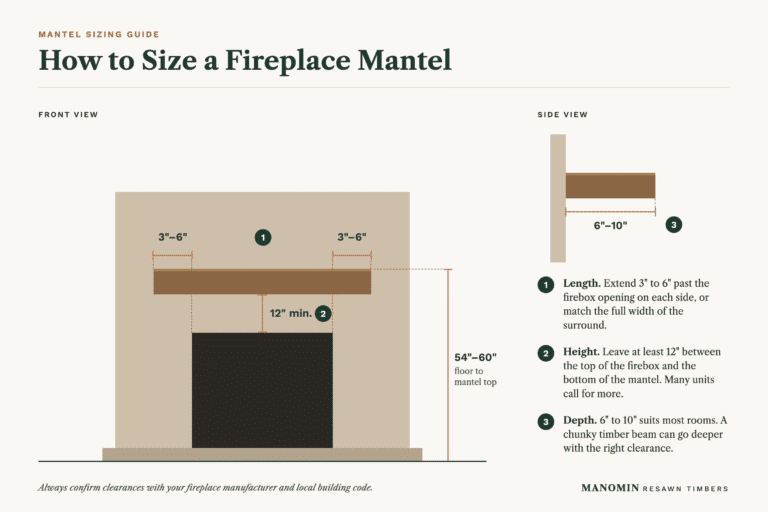
Proportion is what separates a mantel that looks intentional from one that looks like an afterthought. A few rules of thumb:
- Length: A mantel typically extends 3 to 12 inches past each side of the firebox or stone surround. Longer overhangs read more dramatic; shorter, more tailored. On a full stone wall, a mantel can run the entire width.
- Height above the firebox: Local codes and your fireplace manufacturer set the minimum clearance between the firebox opening and a combustible mantel — commonly around 12 inches, but always confirm for your specific unit. More on that below.
- Depth & thickness: A 5–8 inch depth suits most mantel shelves; solid timber mantels often run 6x6, 8x8, or larger for presence. Bigger walls and taller ceilings can carry a beefier beam.
- Scale to the room: Match the mantel’s mass to the fireplace and the ceiling height. A delicate shelf gets lost on a two-story stone chimney; a 10x10 timber overpowers a small bedroom hearth.
Reclaimed Wood Mantels on Different Fireplaces
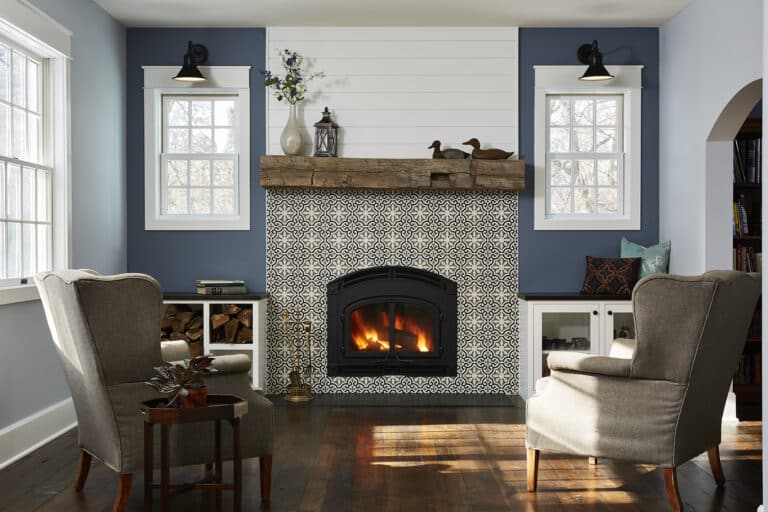
Brick fireplaces — A reclaimed beam warms up red or painted brick beautifully. Mounting is done with a concealed steel rod or lag cleat drilled into the mortar joints.
Stone fireplaces — Stone and reclaimed timber are a classic North Woods pairing. Heavier solid beams shine here; the mounting hardware is set into the stone or a wood blocking behind it.
Gas & electric fireplaces — Because surface temperatures are lower and more predictable, you have more flexibility on clearance — but still follow the manufacturer’s specs exactly.
Wood-burning fireplaces — These run hottest, so clearance to a combustible mantel is critical. A box-beam design helps by keeping solid wood off direct heat.
Floating / tiled walls — For a floating look over tile or a full-height surround, a hidden rod system lets the beam project cleanly with no visible support.
Whatever the surface, the two non-negotiables are secure mounting into structure (not just drywall) and correct clearance from the heat source.
Finishing & Caring for Your Mantel
Part of the appeal of reclaimed wood is that it needs very little. Most mantels are finished with a penetrating natural oil or a matte clear coat that protects the surface while letting the patina show through — never a glossy film that would hide the character you paid for. Some customers leave a weathered barnwood mantel almost raw for maximum rusticity.
Care is simple: dust it, keep it out of standing moisture, and refresh the oil finish every few years if it starts to look dry. A quality reclaimed mantel is old-growth wood that has already survived a century — it’s built to outlast the rest of the room.
Buying a Mantel vs. DIY Installation
Sourcing the mantel and installing it are two different projects. Buying from a dedicated mill means the beam is already selected, milled to size, finished, and ready to hang — and you can get hardware matched to your fireplace. The install itself is very doable for a confident DIYer: it usually comes down to locating structure, setting a concealed cleat or steel rod dead-level, and sliding the mantel home.
We walk through the whole process — including how to hang a heavy solid beam securely — in our dedicated guide: How to Install a Heavy Wood Mantel. If your mantel is going over a working fireplace, confirm the required clearance to combustibles for your specific unit before you mount anything.
What Reclaimed Wood Mantels Cost
Reclaimed mantels are priced per piece rather than off a flat shelf price, because every beam is different. The factors that move the number:
- Species & rarity — in-demand species or unusually large old-growth timbers cost more than common barnwood.
- Size — length, depth, and thickness all add material and weight.
- Construction — a solid timber mantel vs. a hollow box beam.
- Finish & custom work — custom milling, hand-distressing, matched corbels, or a specific color match add labor.
- Delivery — heavy timbers shipped long distances cost more than a local pickup.
Because reclaimed stock is one-of-a-kind, the best way to get a real number is to tell a supplier your dimensions and the look you’re after. Reclaimed generally runs above plain new lumber — but you’re buying old-growth character and a piece that lasts generations, not a commodity board.
Where to Buy a Reclaimed Wood Mantel
You’ve got a few routes: big marketplaces (inconsistent quality, generic stock), local architectural salvage (hit or miss on size and finish), or a dedicated reclaimed-wood mill that selects, mills, finishes, and ships mantels as its actual craft. The last is where you get the best material and a mantel sized to your fireplace.
That’s our world. Manomin Resawn Timbers has one of the largest inventories of antique reclaimed timber in the Upper Midwest, and we ship custom reclaimed wood mantelsnationwide from our mill in Hugo, Minnesota. Whether you want a ready-sized beam or a fully custom mantel matched to your space, you’re working directly with the people who hand-select the wood.
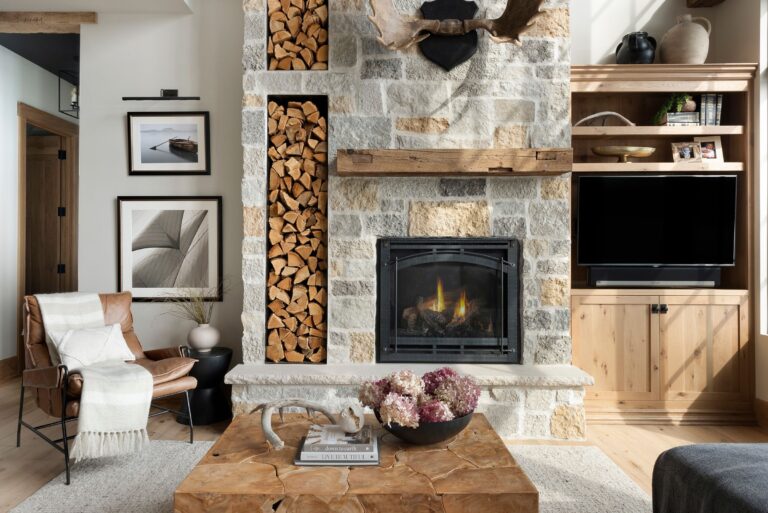
Bring warmth, history, and timeless style to your home with our reclaimed wood mantels—each piece handcrafted from 19th-century barns and factories.
Frequently Asked Questions
What type of wood is best for a fireplace mantel? The best mantels are made from dense, stable species like reclaimed oak, Douglas fir, elm, and heart pine. Reclaimed old-growth timber is ideal because it has already seasoned for decades, so it’s far less likely to warp, twist, or crack than new lumber — and it brings character no new board can match.
Is reclaimed wood more expensive than new wood? Usually, yes — reclaimed wood typically costs more than plain new lumber because of the labor to salvage, de-nail, mill, and finish it, and because old-growth material is increasingly rare. You’re paying for authentic character, superior stability, and a one-of-a-kind piece, not a mass-produced board.
How much does a reclaimed wood mantel cost? It depends on the species, size, construction (solid vs. box beam), finish, and delivery. Because every reclaimed beam is unique, mantels are quoted per piece. Share your dimensions and the look you want and a supplier can give you an accurate price.
How far does a mantel need to be above the firebox? Clearance from a combustible wood mantel to the firebox is set by code and by your fireplace manufacturer — often around 12 inches for wood-burning units, but it varies. Always confirm the spec for your specific fireplace before mounting.
Can you put a reclaimed wood mantel over a brick or stone fireplace? Absolutely — it’s one of the most popular looks. The mantel mounts with a concealed steel rod or lag cleat anchored into the masonry, so no hardware shows. Just maintain the required clearance from the heat source.
Mantel or mantle — which is correct? For the shelf and surround above a fireplace, mantel is the correct architectural spelling. Mantle refers to a cloak or covering. Both get searched online, but mantel is the right word for the fireplace piece.
Do reclaimed mantels come ready to install?From a dedicated mill, yes — the beam is milled to your size, finished, and shipped with mounting guidance (and hardware, depending on the supplier). From there it’s a straightforward install for a capable DIYer, or a quick job for a handyman or contractor.
Bring Home a One-of-a-Kind Reclaimed Wood Mantel
A reclaimed wood mantel is one of the highest-impact, lowest-fuss upgrades you can make to a room — a genuine piece of history that becomes the heart of your home. If you’re ready to find yours, browse our reclaimed wood mantels or start a custom mantel matched to your fireplace and your space. Every one is hand-selected, milled, and finished by our team — and there’s only one like it in the world.
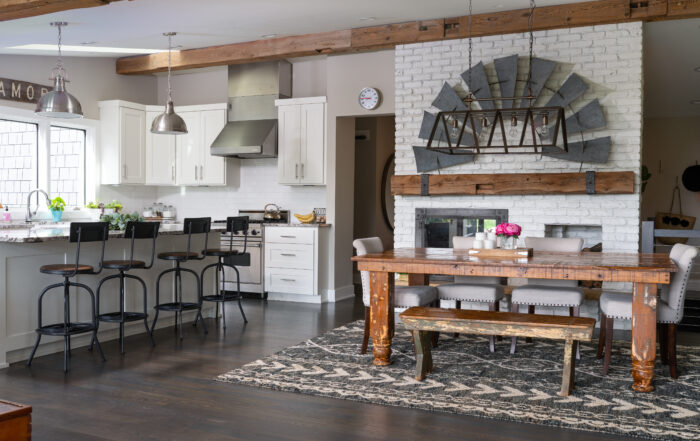
Reclaimed Wood Mantels: The Complete Guide to Choosing, Styling & Installing One
Few details transform a room like a reclaimed wood mantel. A single weathered beam above the fireplace becomes the anchor of the whole space — part architecture, part sculpture, part story. Where a new, machine-milled board reads as filler, a reclaimed timber carries a century of character you simply […]
Inside a Grand Marais Lake Retreat: A North Shore Cabin Reborn
On a quiet stretch of Lake Superior shoreline near Grand Marais, a family cabin that had anchored three generations of memories has been thoughtfully reborn. This Grand Marais lake retreat replaces a beloved generational cabin on the same site — honoring a long family history while setting the stage for the memories […]