
Sustainability & Style: Reclaimed Wood Saves Forests & Elevates Beauty
Creating a sustainable home often comes with a misconception that choosing environmentally responsible materials means compromising on design. But reclaimed wood rejects that idea entirely. It proves that sustainability and style aren’t competing priorities; they’re most powerful when they work together. As more homeowners and designers explore how to build a sustainable home, reclaimed wood continues to stand out as one of the few
By Sarah Londerville | Updated August 10, 2026
Creating a sustainable home often comes with a misconception that choosing environmentally responsible materials means compromising on design. But reclaimed wood rejects that idea entirely. It proves that sustainability and style aren’t competing priorities; they’re most powerful when they work together.
As more homeowners and designers explore how to build a sustainable home, reclaimed wood continues to stand out as one of the few materials that delivers equally on environmental impact and visual appeal.
A Sustainable Home Starts with Smarter Materials
At the core of every sustainable home is intentional material selection. Where materials come from, how they’re processed, and how long they last all contribute to the overall environmental footprint. Many modern building materials prioritize speed and cost-efficiency, often at the expense of longevity and sustainability. Reclaimed wood offers a different path, one rooted in reuse rather than extraction, making it one of the most effective eco-friendly solutions available today.
But what makes it truly unique is that its environmental benefits don’t come at the cost of design. In fact, they enhance it.
Reclaimed Wood: The Step Forward
Reclaimed wood plays a vital role in building a sustainable home by reducing the demand for newly harvested lumber. Every salvaged beam or board represents fewer trees cut down and less waste sent to landfills.
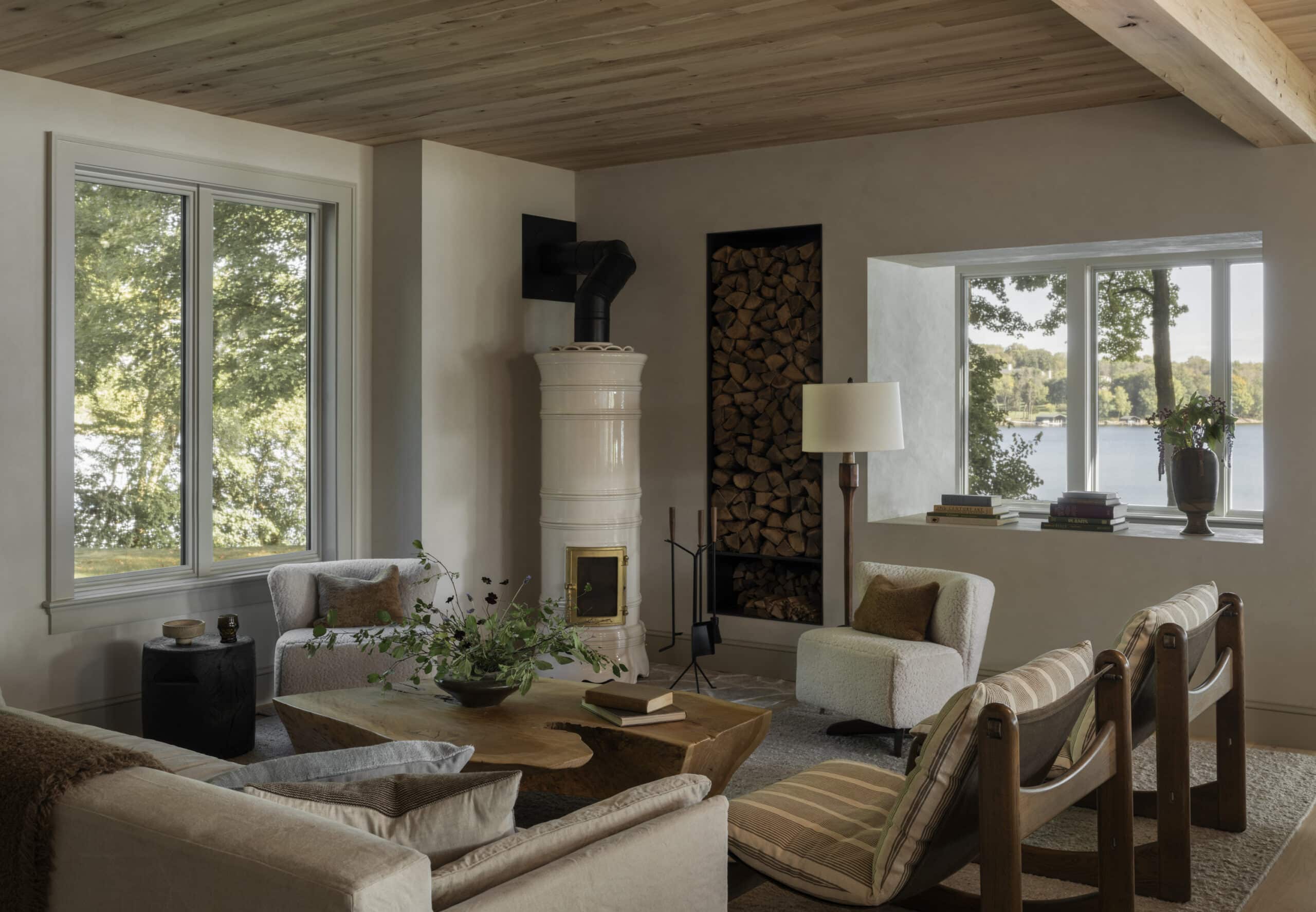
At the same time, it introduces a level of character that newly milled wood simply can’t replicate. The grain patterns, natural patina, and subtle imperfections tell a story, one that brings warmth and authenticity into a space.
For homeowners thinking about how to build a sustainable home, this dual benefit is key: you’re not just choosing a responsible material, you’re choosing one that elevates the entire design.
Preserving Forests, Enhancing Design
One of the biggest environmental advantages of reclaimed wood is its role in forest conservation. By reusing existing materials, it directly reduces the need for logging, making it a powerful contributor to a sustainable home.
But there’s also a design advantage tied to its origin. Much of today’s reclaimed wood comes from old-growth timber, dense, slow-grown wood that offers richer tones and greater durability than most modern alternatives.
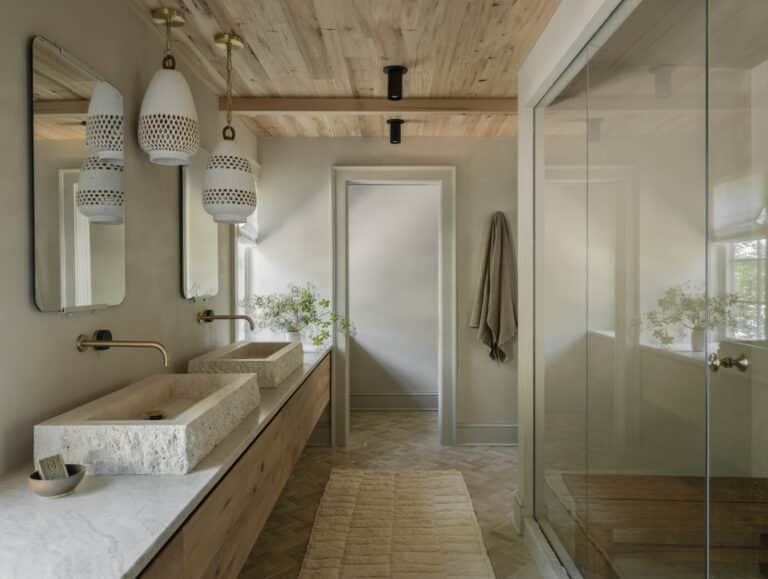
This means that when you incorporate reclaimed wood into a sustainable home, you’re not only protecting forests, you’re also introducing higher-quality materials that enhance the look and feel of your space. Just check out this bathroom below from Yerigan Construction to see for yourself
Durability That Supports Long-Term Sustainability
A truly sustainable home isn’t just about sourcing; it’s about longevity. Materials that last longer reduce the need for replacement, lowering overall environmental impact over time.
Reclaimed wood excels in this area. Having already endured decades, sometimes centuries, of use, it has proven its strength and stability. Once properly milled and prepared, it becomes an ideal material for modern applications.
From a design perspective, this durability also means that the beauty of reclaimed wood isn’t temporary. It evolves over time, adding even more depth to a sustainable home as it ages.
Versatile Design, Thoughtful Impact
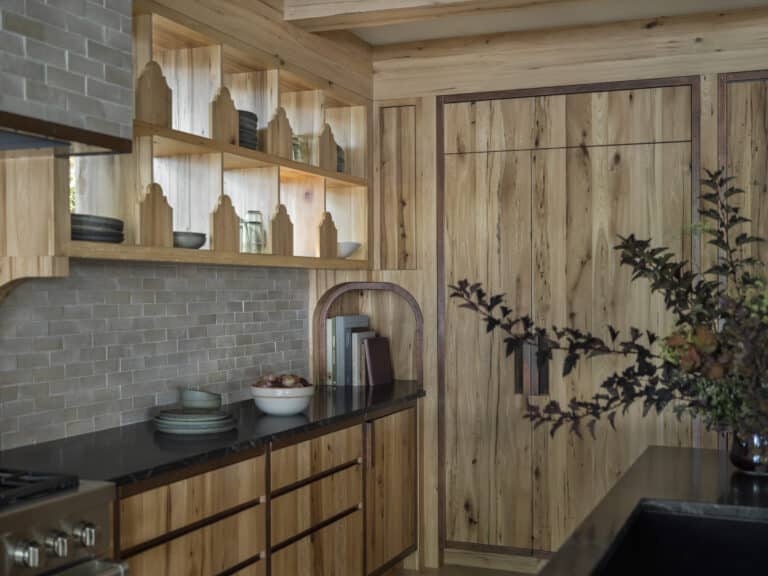
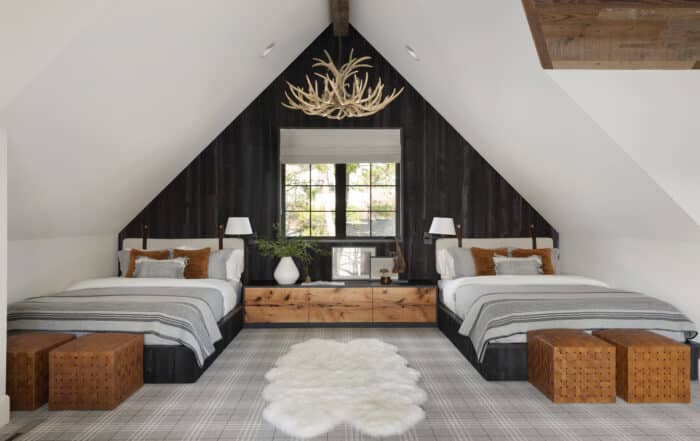
One of the reasons reclaimed wood is such an effective, eco-friendly solution is its versatility. It can be integrated into nearly any part of a sustainable home, including flooring, cladding, ceiling beams, and custom features.
This flexibility allows designers to make sustainable choices without limiting creativity. A reclaimed wood accent wall can add texture to a minimalist space, while exposed beams can bring warmth to a contemporary design.
In this way, reclaimed wood doesn’t just support a sustainable home; it actively enhances the design possibilities within it.
Reducing Environmental Impact Without Sacrificing Style
When considering how to build a sustainable home, it’s important to look at the full lifecycle of materials. New wood requires harvesting, transportation, and processing, all of which contribute to carbon emissions.
Reclaimed wood significantly reduces that impact by skipping the harvesting phase and minimizing processing requirements. This makes it one of the more accessible eco-friendly solutions for homeowners looking to make a meaningful difference.
At the same time, its unique aesthetic ensures that sustainability doesn’t feel like a compromise. Instead, it becomes a defining feature of the design.
A More Intentional Way to Build
Designing a sustainable home is ultimately about making choices that align with both your values and your vision. Reclaimed wood supports that balance by offering a material that is as responsible as it is beautiful.
It encourages a shift away from disposable design trends and toward something more lasting. Something with depth and purpose.
For those exploring how to build a sustainable home, this kind of intentionality is what transforms a project from simply functional to truly meaningful.
Build Something That Lasts
If you’re looking to create a sustainable home that reflects both your design vision and your values, reclaimed wood offers one of the most impactful ways to do it, bringing together eco-friendly solutions, lasting quality, and timeless character in every detail. Connect with our team to start your project and explore how reclaimed wood can bring your vision to life.
We believe the process matters just as much as the final product; see more of that story here.
Project Highlight: “Hand Hewn” — A Minnesota Lake Home and the Team Behind It
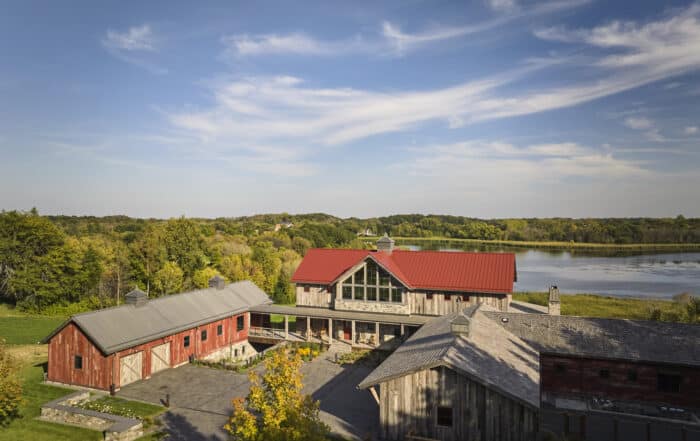
Every so often a project comes along that reminds you why you fell in love with reclaimed wood in the first place. “Hand Hewn” is one of those. Set on a quiet lake in Minnesota, it’s a barnhouse that walks the line between past and present — Minnesota vernacular farmstead […]
6 Best Reclaimed Wood Suppliers in Minnesota (2026 Guide)
Reclaimed wood has quietly become one of the most sought-after materials in Minnesota building and design. Walk through a Parade of Homes model in the Twin Cities, a lake home on Gull or Minnetonka, or a boutique hotel lobby in Minneapolis, and you’ll almost always find it: hand-hewn box beams […]